Co-Creating Change
With Mariko McTier, Co-CEO & Co-Founder, Social Innovation Japan & mymizu
Welcome to Eat Takeaway! In this series, we hear from business, brand, and marketing leaders on how they’re navigating transformation, building connection, and defining success in a changing world. We explore their day-to-day realities, their evolving industries, and the lessons they’ve learned leading teams through rapid change. Check out our takeaways at the end!
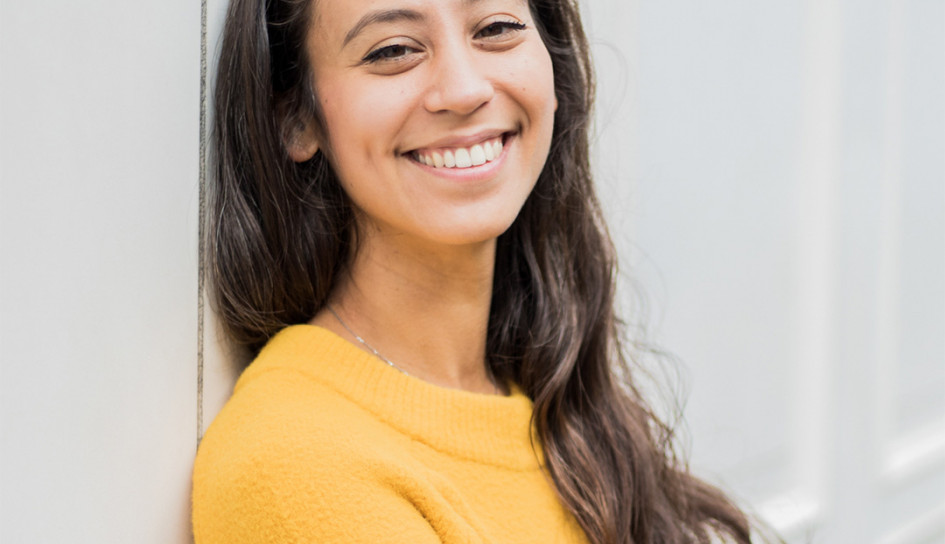
In this edition, Eat Project Manager Kanako Fujioka sits down with Mariko McTier, Co-CEO & Co-Founder of social enterprise Social Innovation Japan and its flagship initiative, mymizu, the world’s leading, and multi-award winning water-refill app. Together, they explore the power of co-creation and how to fuel it into social innovation and impactful action.
The 3 Key Quotes:
1. “For us, it’s co-creation. We don’t just provide a service. We invite people to build something with us.”
2. “Japan has a long-standing sense of social responsibility, ideas like sanpō yoshi. So it’s not that the concept doesn’t exist. It just hasn’t been structured in the same way.”
3. “We want people to feel a sense of ownership and connection to their impact. That sense of participation is incredibly powerful.”
Kanako Fujioka: Mariko san, thank you for joining Eat Takeaway. I'm excited to learn more about mymizu and Social Innovation Japan. First, how did it start and become a driving force of social innovation in Japan?
Mariko McTier: Social Innovation Japan began back in 2017 as a small experiment. With Robin and Keiko, my co-founders, we started organizing community events focused on social and environmental issues and the people actively working to tackle them.
The idea initially grew from shared frustration. Having spent time abroad, we saw people taking inspiring action, but struggled to find spaces in Japan where we could discuss these topics openly, so we created our own. With the aim of raising awareness and showcasing the innovation taking place, we invited people from NPO founders to corporate leaders to talk about the work people were doing. What began as a voluntary, spare-time project revealed new possibilities, and from there, Social Innovation Japan began to grow and evolve.
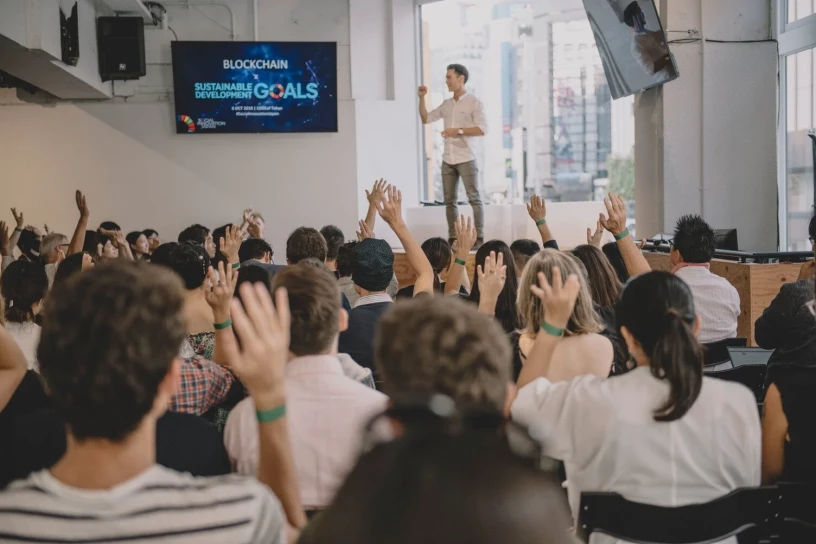
Photo credit: Social Innovation Japan / mymizu
KF: You’ve mentioned that Japan has fewer social enterprises compared to western countries like the UK. Why is that?
MM: In the UK, social enterprise is a more established category, with clearer support structures and organisational options, which makes it easier to define and support. When I was working with startups in both the UK and Japan, I noticed that many UK founders were building businesses directly rooted in a social issue tied to their own experiences.
So we wondered, ‘What if we made it easier to refill a reusable bottle instead of relying on single-use plastic?’ The answer was a refill platform.
In Japan, I saw fewer ventures that were explicitly built around a social mission. That’s changing now, and it’s been encouraging to see the growth of social businesses here, and, of course, challenges also remain. Risk tolerance is still low, funding options are limited, and there’s still a strong belief that social issues should be handled by governments or nonprofits.
At the same time, Japan has a long-standing sense of social responsibility, ideas like sanpō yoshi (the Ōmi merchant principle from 18th century Japan meaning ‘good for the seller, good for the buyer, and good for society’) show that. So it’s not that the concept doesn’t exist. It just hasn’t always been defined or structured in the same way.
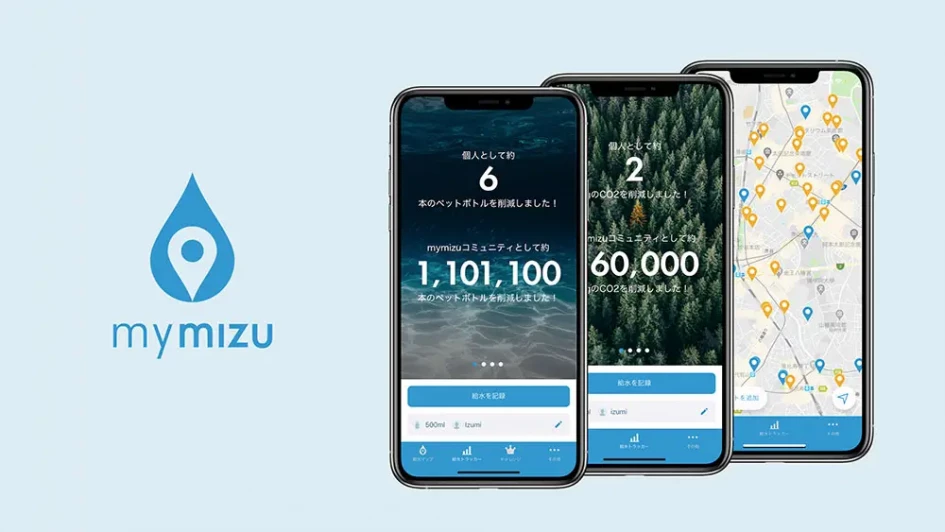
Photo credit: Social Innovation Japan / mymizu
KF: How did mymizu come about?
MM: One area we focused on was circular economy, the idea of stopping this linear process of taking resources, making things, and turning them into waste, and instead designing systems where everything cycles.
I was really taken with this idea. I felt there was huge potential here to provide solutions to issues like the climate crisis, plastic pollution, and overconsumption. And I kept coming back to the same question. It’s a great concept, but how do we actually make it work?
After more than a year of experimenting and running workshops with companies, we realised that overuse of plastic and subsequent waste is a big issue here in Japan. So we wondered, ‘What if we made it easier to refill a reusable bottle instead of relying on single-use plastic?’ The answer was a refill platform.
mymizu is a free app where people can find places to refill their bottles, while shops and businesses can sign up to provide drinking, often filtered, water, and get visibility through the app. It’s free for users and beneficial for participating businesses.
Today, we have around 2,500 partner stores across Japan, as well as a growing number globally, and over 200,000 refill spots worldwide. Many of these are crowdsourced by users, alongside information added by local governments. The goal is simple: to help people shift, where possible, from single-use plastic to reusable bottles.
KF: It’s incredible that you’ve been able to build so much support. What was your approach?
MM: For us, it’s co-creation. We don’t just provide a service. We invite people to build something with us. The mymizu app is crowdsourced by design, because we want people to feel a sense of ownership and connection to their impact.
Whether it’s adding refill spots, joining as a partner business, or supporting a crowdfunding campaign, people become deeply engaged when they’re contributing to something bigger than themselves. That sense of participation is incredibly powerful.
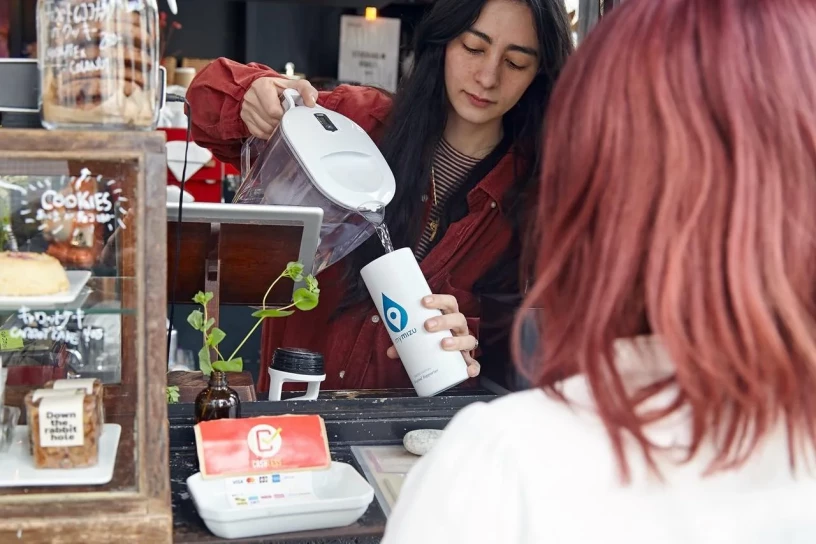
Photo credit: Social Innovation Japan / mymizu
KF: You also support sustainability initiatives at a corporate level. How does that fit in?
MM: We see ourselves as a social innovation lab. Alongside initiatives like our women’s entrepreneurship program with L’Oréal, we work on projects in areas such as sustainable tourism and wellbeing, collaborating with companies, governments, and startups to experiment and build new approaches together.
For us, it’s co-creation. We don’t just provide a service. We invite people to build something with us.
What really matters to us is the relationship. With partners like LIXIL, for example, we co-created an initiative from zero to one during COVID, when many companies were struggling to find meaningful ways to engage employees globally. Together, we designed the LIXIL Community Day, mymizu Challenge, a month-long, team-based program where employees across regions used the mymizu app to log refills and track how many single-use plastic bottles they avoided.
More than 2,600 employees took part worldwide, and over the course of the campaign they collectively saved around 34,000 PET bottles. But what was most important wasn’t just the number. It was seeing people change their daily habits, talk about sustainability within their teams, and realise that small, individual actions can scale when you make them visible and shared. That kind of eye-to-eye, respectful collaboration, where both sides are learning and building something together, is something we truly value.
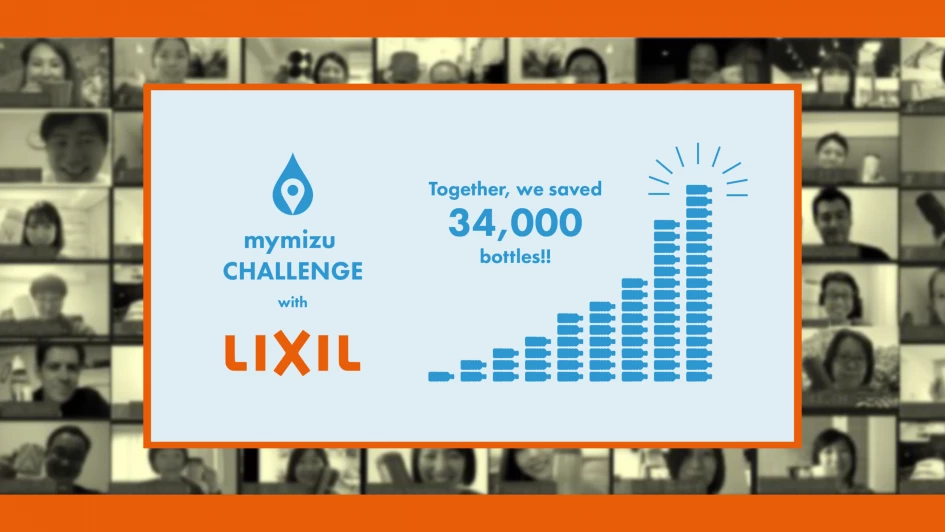
Photo credit: Social Innovation Japan / mymizu
KF: While sustainability is increasingly gaining support and progress, there’s also inevitable challenges such as pushback from corporate and low consumer awareness. How do you grow and gather support in such an environment?
MM: Our approach is to invite people to build something with us, rather than forcing them to. Early on, before the app even existed, we ran very simple experiments to test demand. We shared a basic mock-up and invited shops to sign up as refill partners, and the response showed us that people cared. They wanted to participate.
We want people to feel a sense of ownership and connection to their impact. That sense of participation is incredibly powerful.
Our approach is always to start small, test, listen, and build from there. It’s experimental, but it’s grounded in years of research, workshops, and conversations. We’re constantly asking, ‘Is this something people want to participate in?’
KF: Finally, looking ahead, what are you most excited about?
MM: For For mymizu, it’s about becoming part of everyday civic infrastructure, working more closely with local governments and expanding beyond plastic reduction into health and wellbeing. We’re also seeing growing demand for our refill data, which opens up new possibilities for scale and sustainability.
For Social Innovation Japan, it’s about deepening our role as a space for experimentation, learning, and regeneration, using what we’ve learned so far to support new ideas and new ways of creating impact.
Small experiments lead to big impact:
From early mock-ups to now a refill network with global reach, Social Innovation Japan’s growth started from testing, listening, and repeating. By starting small and affirming positive results, Social Innovation Japan built solutions grounded in real-world behavior and success.
Japan’s social responsibility is different, not absent:
Concepts like sanpō yoshi show that social responsibility has long existed in Japan. The challenge isn’t always awareness, but structural—creating modern frameworks that turn deeply rooted values into scalable, sustainable social initiatives.
Co-creation fuels social innovation:
Social Innovation Japan’s work is built on participation, not persuasion. By inviting people to co-create, through community events, crowdsourced refill spots, or collaborative corporate programs, impact becomes something people feel ownership over and become a part of.
If you enjoyed this piece, subscribe here to The Eat Digest - our monthly newsletter covering our latest insights, Japan brand and marketing news, and more.